


A fountain pump works hard. It runs for hours at a time, sometimes for days on end, pushing water through a small motor that stays underwater the entire time. That means fountain pump replacement is not a matter of if, but when. The real question is why the old one quit and what you should buy so the next one lasts.
The most common causes of fountain pump failure are usually easy to understand. Once you know what they are, you can avoid buying the same ineffective unit twice. You stop paying for fixes that never last. Here is what usually spells doom for a pump and how to select a fountain pump replacement that does not leave you staring into a stagnant green pool next summer.
Why Pumps Quit on You
Most pump failures come from a few common causes. The biggest one is low water. Submersible pumps use the surrounding water to cool their motors. If the water level drops below the intake, even a small intake opening, the motor can overheat as it continues to run. During a hot week, evaporation can do this quietly while you are focused on something else.
Debris is the next culprit. Leaves, algae, and other vegetation clog the intake and impeller. An obstructed inlet makes the motor work harder, which wears it out more quickly. The spray starts to weaken, and then one day, it stops altogether.
Worn parts finish the job. The impeller can crack, the shaft can loosen, or a bad seal can allow water into the motor housing. A jammed or broken impeller may produce a humming sound with no spray. Even a great pump eventually gives in after enough years of use.
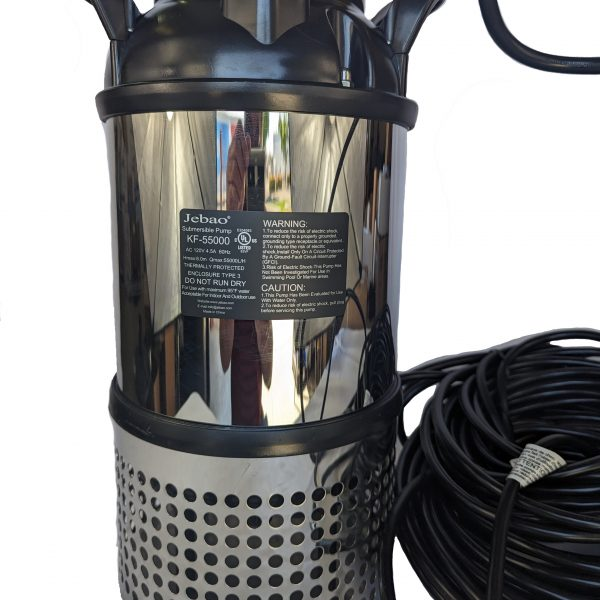
Source: https://www.fountaintechpumps.com/wp-content/uploads/2023/07/stainless-pump-600×600.jpg
Size plays a part too. An undersized pump runs wide open, and that strain shortens its life. Some people buy small to save a few dollars, then end up replacing the pump again and again. The math rarely works in their favor.
When Repair Stops Making Sense
Some problems are worth fixing. A clogged intake may only need a quick cleaning, and a cracked impeller may be cheap to replace. However, at a certain point, another repair just kicks the can down the road.
Think about replacement when the pump fails again soon after it is repaired.
Think about replacement when it hums but fails to move water after you clean it.
Think about replacement when it trips the outlet or smells burnt.
Think about replacement when it is past its prime and repair parts are nearly as expensive as a brand-new unit.
A pump that dies over and over by mid-summer is not really saving you anything. It may just keep the pond looking sad while you wait for the next fix.
What to Buy Next: Matching the Pump
This is where people often get it wrong. They choose the pump that fits their budget, not the pond. Let two factors guide you.
First is GPH, or gallons per hour, which describes the volume of water the pump can move. You should aim to turn over 50% of your pond volume each hour. Second is head height, which is how far the pump can raise water before the flow weakens. A tall spray or raised outlet requires greater head height than a low, simple fountain.
But bigger is not always better. A pump that is too large can pull water out of the basin too quickly, splash water over the sides, or increase the risk of running dry. First, measure your previous setup, then choose a pump that suits it, not simply the biggest pump on the shelf.
Source: https://www.fountaintechpumps.com/wp-content/uploads/2022/11/fountain-tech-ft-14000.jpg
Features Worth Paying For
A few features are worth the small extra cost.
Look for a low-water shut-off sensor that cuts power before the pump runs dry.
Consider a magnetic-drive design, which has fewer parts to wear out.
Choose a removable intake screen and impeller so cleaning only takes a few minutes.
Pick a pump with a proper warranty, since the pump is the working part of the whole setup.
Cheap pumps are tempting. But a unit that dies every year is more expensive than a good one you buy once.
A Quick Word on Timing
A pump often quits during the hottest part of summer, right when the pond needs movement most. That is not bad luck. Summer heat speeds up evaporation and forces a tired motor to work harder. Replacing the pump before the season begins, or keeping a backup in your toolbox, can save you from a stressful weekend repair.
Installing the New One Right
You can ruin a new pump quickly if you miss something during setup. Take a few minutes to install it properly.
Place the pump deep enough that the intake stays well below the waterline. Plug it into a GFCI-protected outdoor outlet. Outdoor water-feature electrical connections should have GFCI protection. Keep the cord away from walkways and mower blades. During hot spells, top up the water so the pump never has to gasp for it.
A fountain pump replacement does not need to become an annual process. Match the old pump’s specs and dimensions to a new one, learn how the previous one failed, and give the replacement a properly submerged home. Do that, and the sound outside will not be silent. It will be water.